



Coxswain Basics: What a Coxswain Actually Does and How to Do It Well
A beginner's guide to the coxswain's real job — steering, safety, drill calls and race calls — with practical habits to build from your first outing.
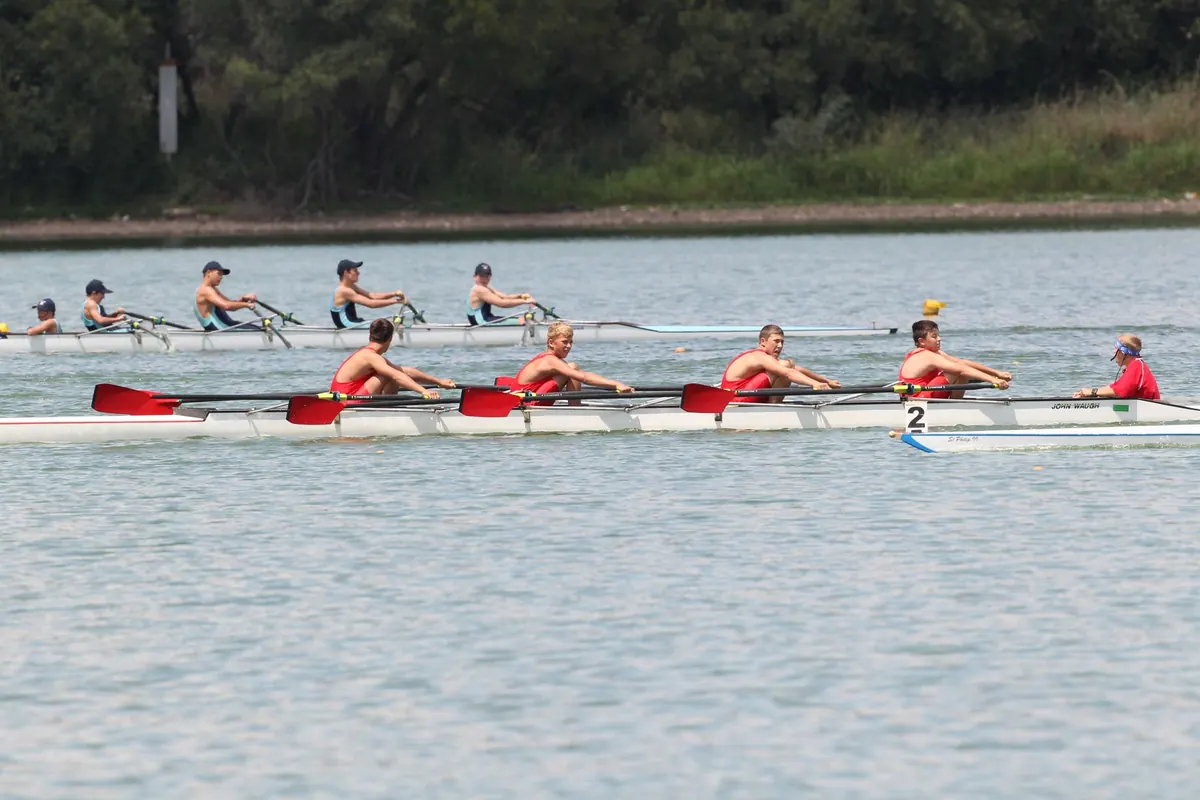
A coxswain faces the rowers and holds four things in their head at once: where the boat is going, how it is moving, what the crew needs, and what could go wrong in the next thirty seconds. Everything else — the calls, the drills, the numbers, the noise — serves those four things.
New coxswains worry about saying the right thing. Experienced ones worry about steering. That tells you where to put your attention.
What the Coxswain Is Actually For
You are the only person in the boat who can see forward. Rowers see the back of the person in front of them and the water they have already passed. You see the buoy line, the launch wash, the eight appearing from behind the bend, the log floating twenty metres off the bow.
You are also the only person who can talk, which makes you the crew's coach on the water, its navigator and, when something goes wrong, its first responder. Most days the job is quiet: holding a point, keeping the rhythm steady, saying three or four things that change how the boat moves. Some days it is about getting everyone home safely. Accept both. The quiet days build the trust you need for the other kind.
Steering Without Drama
Steering is mostly anticipation. By the time you need the rudder, you are already late.
- Look far ahead. Pick a point two hundred metres down the course, not five metres off the bow. Small corrections early are invisible; big ones late cost speed.
- Use the rudder in sips. Long pulls kill run. Tap, wait, watch what happens, then tap again if you need to.
- Steer off fixed landmarks. A tree, a marker, a gap between two buildings. Drift shows up much sooner against something that does not move.
- Know your water. Stream, tide, wind and bend all push you somewhere. Decide which way before you push off, then steer into it.
Docking rewards restraint. Come in slowly, into the wind or stream if you can, and call "way enough" earlier than feels natural. Everyone would rather wait ten seconds for a boat to drift in than watch you arrive at speed.
Safety: The Part You Can't Get Wrong
This is where a coxswain earns their place. Rowing is safe when everyone follows local rules, and the coxswain is the one who knows them. Learn your club's traffic pattern, the rules of your water, and what to do after a capsize or when a crew stops in the wrong place. Ask a coach to walk you through the emergency plan before your first outing, not after.
Before You Push Off
- Bow ball on, and tight.
- Heel ties or heel-release mechanisms in place, every seat.
- Boat checked for water, loose bolts, damaged riggers.
- Cox box working, volume set, spare batteries if you carry them.
- Weather and stream checked, with a plan for turning around.
- Buoyancy aid on, and a way to call for help that stays dry.
Cold water is what new coxswains underestimate most. Dress for immersion, not for the air temperature on the bank, and be honest with yourself about your swimming and the conditions. If something feels wrong about the weather or the water, say so before the boat leaves the dock. Nobody has ever regretted that. Where local safety rules or conditions are unclear, follow your club's guidance and ask a qualified coach rather than guessing.
Running a Practice: Drills and Calls
Drills teach you how to talk to a crew. Learn the words before you use them.
A pause drill stops the crew with blades squared and buried while the boat keeps running. Call the point: "Pause at bodies over... and go." Balance, sequencing and run are all visible in the pause, and the next stroke has to be called cleanly so the crew picks up without a lurch.
Build drills run the other way: quarter slide, half, three-quarter, full, eight or ten strokes at each. Count for them and name what you want — "half slide, same ratio, long at the front."
For technical work, give one instruction at a time. A crew given six things to fix fixes nothing. A fault you see three times is worth a call; a fault you see once may have been a wave.
Race Calls That Move a Boat
Race calls are short, specific and tied to something the crew can do. "Commit at the catch." "Ten for length." "Legs on, now." "Bow pair, hold the rhythm." Each one is a task, not a mood. Vague encouragement burns air and gives nobody anything to act on.
Build a plan before the race: your start sequence, where you call the settle, the points where the crew gets a move, and the moment in the last five hundred metres where you go all in. Write it down. The middle of a race is no place to invent tactics.
Learn to say nothing, too. If the boat is running and the crew is locked on, a coxswain who stays quiet for forty strokes does more good than one who fills every second.
Finding Your Voice
Tone matters as much as content. A calm voice solves small problems: "We're drifting off the line, two taps to port." A sharp voice is for urgency: "Hold it up hard, buoy ahead." Coxswains who shout constantly get tuned out within a month. Save the volume for moments that need it.
Use names or seat numbers, not "guys." Learn which rower wants technical detail and which one needs a simple target. That takes a season to work out, and it is worth every outing.
Your First Month: A Practical Plan
Cox as often as you can, with as many different crews as possible. Ask a coach to watch you steer and tell you the truth about your line. Sit in a launch and listen to an experienced coxswain run a session, then borrow the parts that worked. If you can get out in a single or a pair, do it — nothing teaches steering feel faster than being the person who has to keep the boat straight.
Keep a notebook. After each outing, write down one steering lesson, one call that worked and one thing to fix. Read it before the next one. That habit, more than any single piece of advice, is what turns
Photo: Robert So / Pexels